
Petrol cars are on the way out. Are you ready to go electric?
By 2030 the UK government wants 80 per cent of new cars to be EVs. These are the changes needed to accelerate the transition











Welcome to our imaginary town of Greenwell! Everything here is designed to make using your electric car easy.
Legislation and grant schemes mean there are many public and private charge points — on the street, at residential flats, shopping centres and workplaces. Some are higher-powered to enable rapid fuelling.
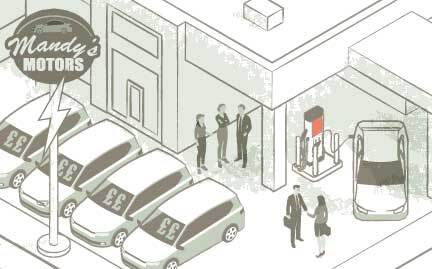
Mandy’s Motors has lots of affordable EVs thanks to government incentives for manufacturers. Consumers also get money back in tax, making EVs cheaper upfront than combustion engines.
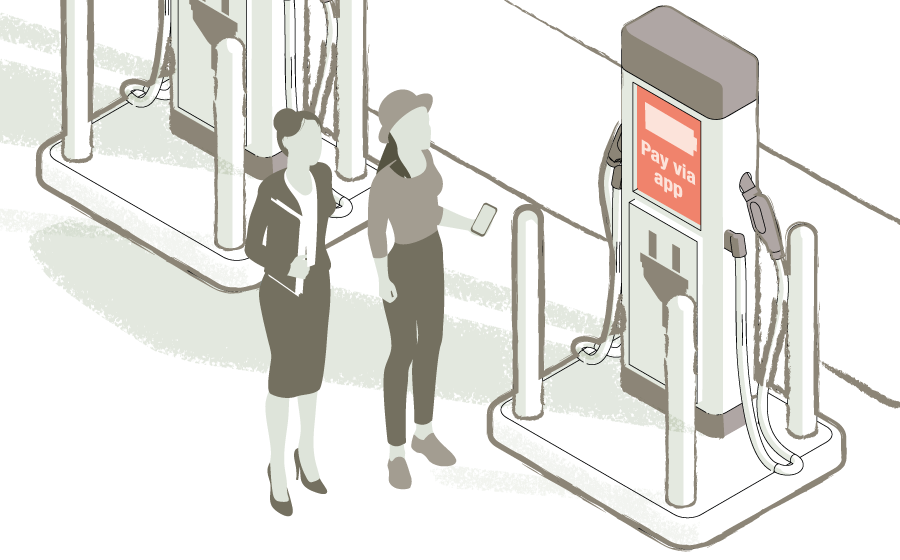
A single payment account means it’s easy to recharge even though multiple companies run the system. This competition has also helped drive down charging costs.
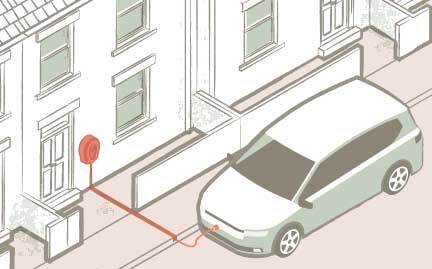
Greenwell’s dynamic pricing system encourages drivers to hook up when demand for electricity is low or when renewable energy is plentiful and cheap.

Vehicle-to-grid technology also allows Greenwell’s car owners to make charging even more economical by sending power back to the grid when it’s needed.

Despite being EV-friendly, you don’t always need a car. There’s great public transport, car-share clubs and e-bike rentals. Some areas are car-free, encouraging people out of vehicles altogether.
Back in the real world, Greenwell’s EV utopia is a long way from the experience of Britain’s current electric vehicle owners — a reality putting many motorists off making the switch.
EV sales are expected to reach last year’s 22 per cent government target. But the market share of battery vehicles has not risen significantly over the last two years, and greater numbers of motorists will need to make the shift if the UK is to meet its commitment to phasing out new petrol and diesel cars by 2030 and hybrids by 2035.
“I’m not too concerned about the first three years [of government-mandated targets] but the transition from 33 per cent in 2026 to 80 per cent in 2030 is a big leap,” Kia’s UK head, Paul Philpott, says. “That’s when we’ve got to accelerate.”
Yet since the pandemic, surveys show a deterioration in perceptions of EVs among UK drivers. Many balk at upfront prices while others worry about charging availability and running costs.
This is despite new models having adequate range for most people’s requirements, being cheaper to run than petrol and diesel cars when charged at home, and vast improvements in public infrastructure. A large majority who do switch say they are unlikely to go back.
In order to accelerate take-up, such consumer concerns — both real and imagined — will need tackling.
What most puts you off buying an EV?
Select one of the options to explore what matters to you

EVs remain more expensive upfront than their fossil fuel equivalents and for UK buyers already battling high living costs, large initial price tags are regularly cited as a major concern.
According to Auto Trader, the UK’s largest digital automotive marketplace, a new electric vehicle was 25 per cent more expensive than an internal combustion engine vehicle last month. Just 26 electric models could be bought for under £30,000, while there were 67 petrol or diesel cars.
For example, the non-luxury Volkswagen five-seater ID.3 hatchback is listed on Auto Trader for £30,850, while its five-seater Polo petrol hatchback can be bought for £20,990.
“There are things around charging infrastructure and range anxiety . . . but they pale in comparison to the fact that these cars cost a lot more to build and they’re costing a lot more to buy,” says Nathan Coe, Auto Trader’s chief executive.
Amid a slowdown in car sales among private buyers last year, fleet purchases and discounts have driven some EV sales growth. However, the market share of battery vehicles has not risen significantly since 2022.
Electric vehicle sales have risen despite high upfront costs . . .
Number of new car registrations in the UK
. . . with one in every five new cars in 2024 a battery EV
New car registrations in the UK by type, %
Incentives designed to entice drivers to switch have also disappeared.
Government grants for plug-in cars, initially worth up to £5,000, were ditched in 2022. From April, existing EV drivers will also be hit with the same road taxes as petrol and diesel drivers — amounting to an additional £195 a year. EVs priced over £40,000 will face an additional duty of £400.
Such taxes are “a step backward”, says Marc Dal Cin, founder of EV Charger Installation, an Australian company.
Solutions
Analysts expect the upfront price gap between electric vehicles and internal combustion equivalents to close in the next few years, with prices for used EVs reaching parity even sooner.
Tougher UK EV targets, competition from China and reduced battery costs are all expected to lead to a more diverse range of vehicles in 2025.
EVs are still more expensive to buy, but the gap is shrinking
Difference in median recommended retail price of electric vs internal combustion engine models, %
The UK’s zero emission vehicle targets, set at 28 per cent per manufacturer in 2025, rise each year until the end of the decade, with fines issued for missing them.
Although the government is reviewing the rules to make the annual targets easier to reach, ministers insist the timetable will remain.
But the UK auto industry wants to see more flexibility in the mandate and new incentives to help companies reach the thresholds. Such carrot-based approaches have been successful elsewhere, such as in early EV adopter Norway, where for years electric vehicles were exempt from VAT, import and road tax. Although pressure on public finances has led to some of these incentives being withdrawn in recent years, 88.9 per cent of new cars sold in Norway in 2024 were fully electric.
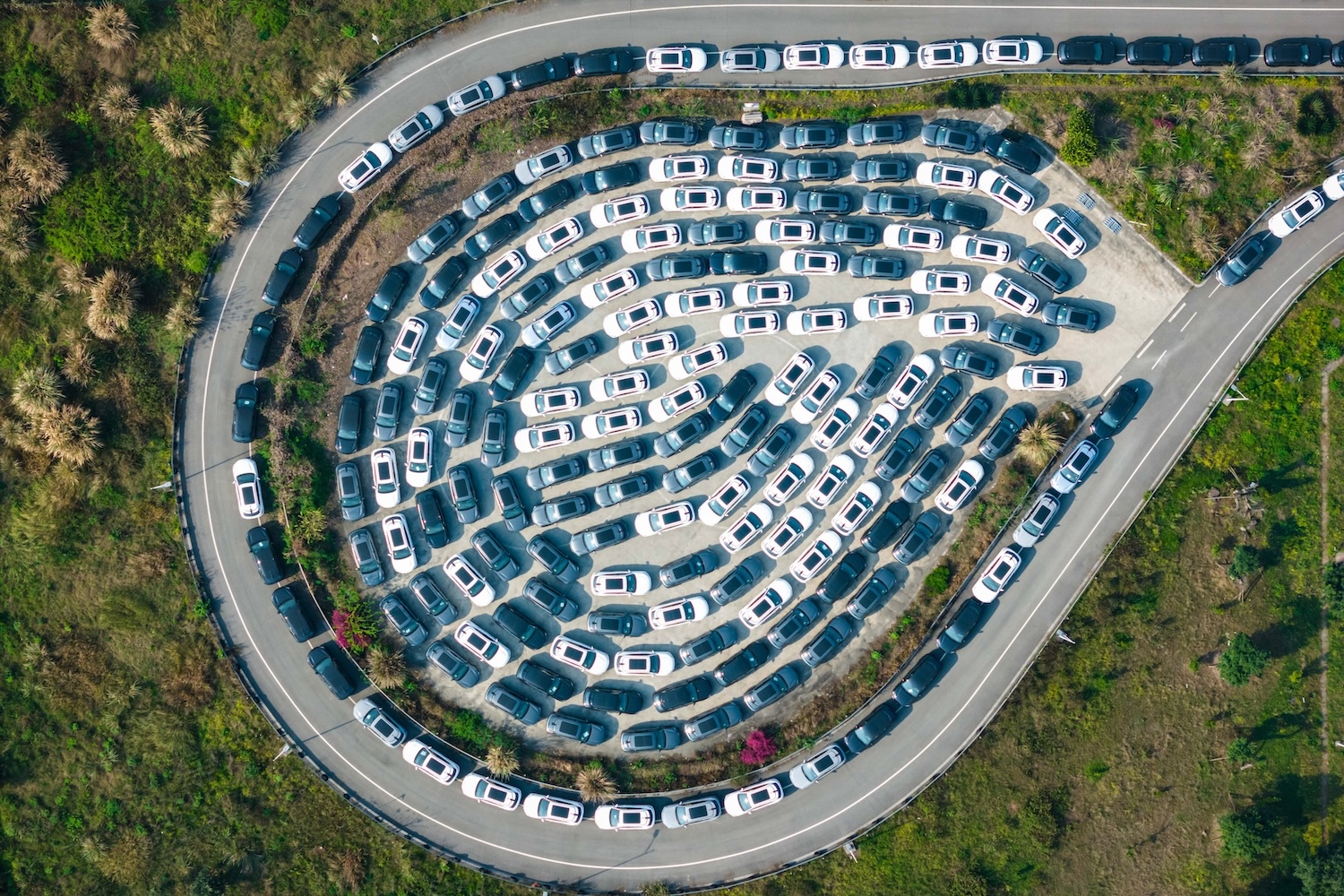
The Chinese government has also offered big tax exemptions, putting the country on track to sell more EVs than internal combustion engine vehicles for the first time in 2025, years ahead of western rivals. In the US, President Donald Trump has said he will end what he regards as “unfair subsidies” for electric vehicles as he attempts to unpick Joe Biden’s climate agenda.
Comparing the lifetime costs of an EV with a combustion engine vehicle is complicated, but with incentives to tackle the upfront cost and charging mostly at home, an EV works out cheaper to run overall, says Ben Nelmes, chief executive of New AutoMotive, a non-profit organisation that supports the transition to electric vehicles.
Some UK companies now offer salary sacrifice leaseholds, giving workers tax and national insurance savings. For example, Octopus Electric Vehicles leases EVs to companies such as Greene King, Dyson, Purplebricks and the FT. “That makes it extremely affordable,” says George Thurman, co-founder of Women Drive Electric, an online community of female EV drivers. “People are absolutely surprised by how much money they are saving.”

Beyond initial cost, worries about charging and range were among the top reasons Britons gave for considering buying a non-EV car in a recent YouGov survey.
Yet 99 per cent of all car journeys in England are below 160km (100 miles), with the average around 13km, according to government figures. This compares with advertised average ranges of 380km and highs of 724km. However, consumer advocates say ranges are often lower than those advertised because they do not always reflect real-world driving conditions.
But the distance EVs can travel on a single charge is improving. Based on performance simulations, the average real-life range of a new plug-in vehicle in the UK has more than tripled in the past decade to 380km, according to the EV Database, which would get you from London to Birmingham and back.
More EVs with longer range are on the market
Estimated real-world range of EVs available to buy in the UK, km

100
200
300
400
500
600
700km
2011
Nissan Leaf
2012
2013
Tesla Model S
2014
Median
2015
Longer range
2016
2017
2018
2019
2020
2021
2022
2023
2024
Audi Q4 e-tron
Tesla Model Y
Mercedes
EQS 450+
The most popular EVs in 2024

0
100
200
300
400
500
600
700km
Nissan Leaf
2011
2012
2013
Tesla Model S
2014
Median
2015
Longer range
2016
2017
2018
2019
2020
2021
2022
2023
2024
Mercedes
EQS 450+
Audi Q4 e-tron
Tesla Model Y
The most popular EVs in 2024
In addition, roughly two-thirds of British homes have access or potential access to off-street parking, according to motoring organisation the RAC Foundation, meaning they could charge at home overnight at cheaper rates.
For the third of homes without such access, there are now more than 73,000 public chargers, according to Zapmap, a platform that lets EV owners find charge points. Government grants have also paid for more than 57,000 sockets at workplaces since being introduced in 2016. However, funding runs out in March and ministers have not said what, if anything, will replace it.
The number of UK public charge points continues to grow, increasing by about 37 per cent in 2024.
More public charge points installed each year
Total annual installations by power rating
Ultra-rapid devices — capable of adding hundreds of kilometres in minutes rather than hours — rose by 84 per cent.
These installations were “significantly ahead of the growth in electric vehicle sales”, says Melanie Shufflebotham, co-founder of Zapmap. “We expect to see this trend for high growth continue throughout 2025.”
Rising number of high-powered charge points along the UK’s major roads
Locations of ultra-rapid public charge points (power rating of 150kW+) by year

2021:
1,000 ultra-rapid
charge points
2022:
1,700 ultra-rapid
charge points
2023:
3,800 ultra-rapid
charge points
2024:
7,000 ultra-rapid
charge points
Parts of Northern Ireland, Wales and the North East have fewer ultra-rapid charge points along major roads

2021:
1,000 ultra-rapid
charge points
2022:
1,700
2023:
3,800
2024:
7,000
Parts of the North East, Wales and Northern Ireland have fewer ultra-rapid charge points along major roads

1,000 ultra-rapid
charge points
2021:
2022: 1,700
2023: 3,800
2024: 7,000
Parts of the North East, Northern Ireland and Wales have fewer ultra-rapid charge points along major roads
Yet the UK’s charging experience remains patchy.
A National Audit Office report last month found that the UK was on track to have 300,000 public charge points by 2030 — but that, as of July 2024, only 15 per cent of those in England were in rural locations. The report said between 250,000 and 555,000 were needed nationally by 2030.
Fewer than one in five households in Great Britain requiring access to a public charge point has one nearby, according to data from non-profit transport consultancy Cenex. Homes in London and the south-east are far more likely to be within a four-minute walk of a public charger than those in Wales and the Midlands.
Cenex’s data also estimates how the supply of public charging compares to demand. In England, the London borough of Camden is 40 years ahead, while Castle Point in Essex has barely got started. Outside the capital, Coventry is furthest ahead of what is needed.
London is ahead in EV charger provision, with many rural areas behind
Share of households without off-street parking living within a four-minute walk of a public low power (<50kW) charge point

Charge point coverage (%)
15
60
30
45
100
East Lothian
44%
North East
Derbyshire
1%
Newport
27%
Brighton and Hove
77%
London
Public charge points
Slow (3-7kW)
Fast (8-49kW)
99% of households reliant
on public charging in
Kensington and Chelsea
can find one nearby . . .
. . . whereas
in North East
Derbyshire
it is just 1%

Charge point coverage (%)
15
60
30
45
100
London
East Lothian
44%
Public
charge points
Slow (3-7kW)
Fast (8-49kW)
Newport 27%
99% of households reliant
on public charging in
Kensington and Chelsea
can find one nearby . . .
. . . whereas
in North East
Derbyshire
it is just 1%
Brighton and Hove
77%
Another difficulty is that companies focus on areas of high demand, where returns are guaranteed, leading to gaps where there is lower uptake. “It’s great for a company to stick [charging points] in an airport — but you risk getting big charging deserts,” says Zoe Allen, at the C40 Cities think-tank.
Solutions
The government’s £381mn local electric vehicle infrastructure fund, which supports the delivery of public charging infrastructure in England, has been allocated to 113 local authorities.
But charge point companies say planning processes and challenges getting hooked up to the electricity grid are slowing rollout. “About a quarter [of our planning applications] get rejected,” says Robin Heap, chief executive of charge point developer Zest. “Probably another 50 per cent take a very long time.”
Richard Bartlett, senior vice president of BP Pulse, the oil giant’s charging company, says construction accounts for about five to 10 per cent of the time developing a site, while the rest is spent on finding locations, permissions and grid connections.
Ministers have pledged to speed up processes and an audit by Barbour ABI, which provides construction data for English local authorities and the Welsh and Scottish governments, found that more than 120 planning applications equating to hundreds of thousands of charge points had been approved in the past 18 months.
To encourage companies to invest in areas of both high and low take-up, local authorities and Transport for London have started selling bundles of leases containing sites with “varying commercial potential” — a model experts hope will continue to be replicated.
Some companies are prepared to take the hit. “We’re cross-subsidising high-utilisation areas with low-utilisation areas to enable us to build a nationwide network,” says William Bannister, chief executive of independent forecourt operator Motor Fuel Group.
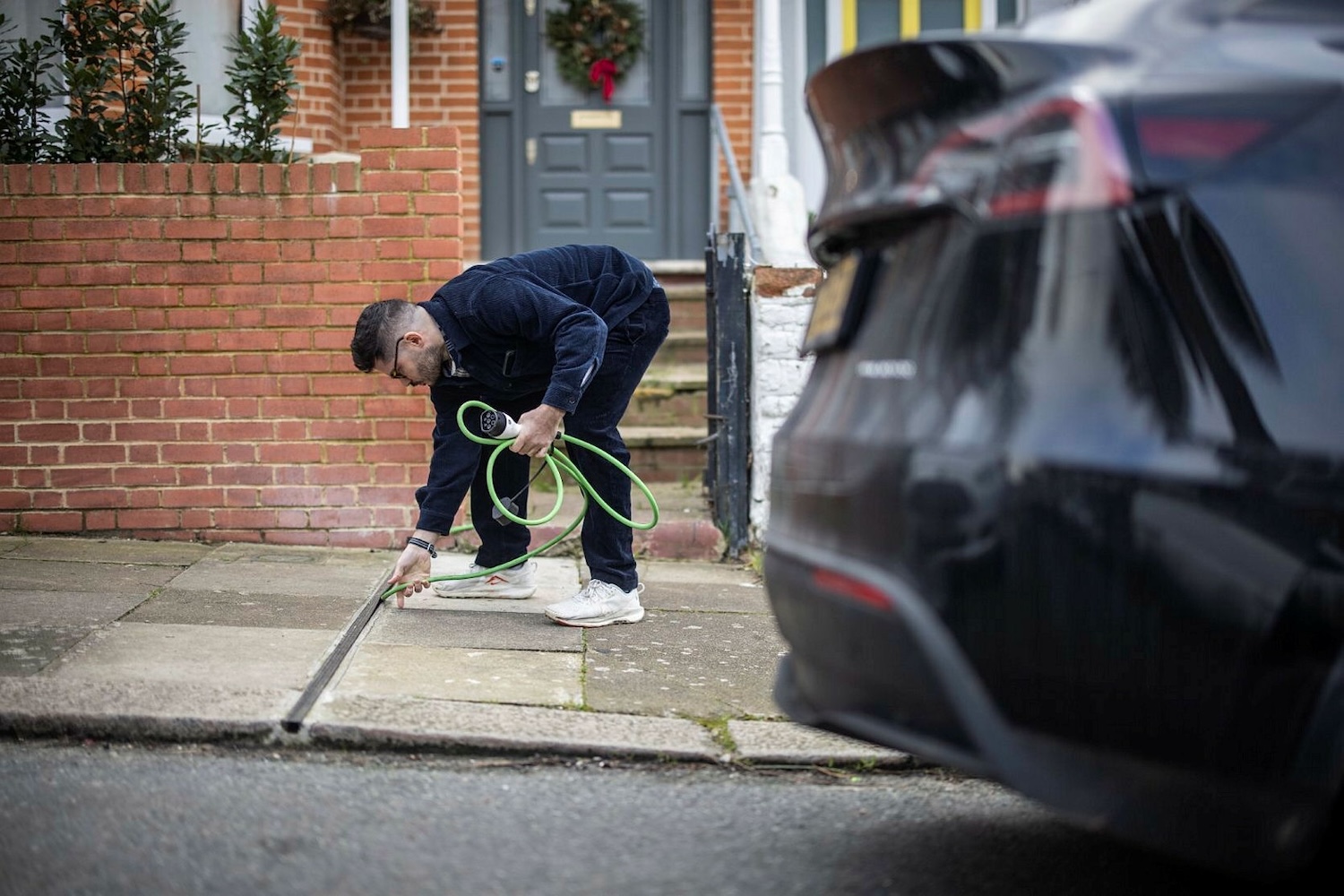
Other solutions include ‘gully’ charging, when a street-parked car is plugged into a home charger via a cable running under a pavement — avoiding the trip hazards of cable covers or mats — given the Highways Act dictates that such cross-pavement cables should not obstruct other street users.
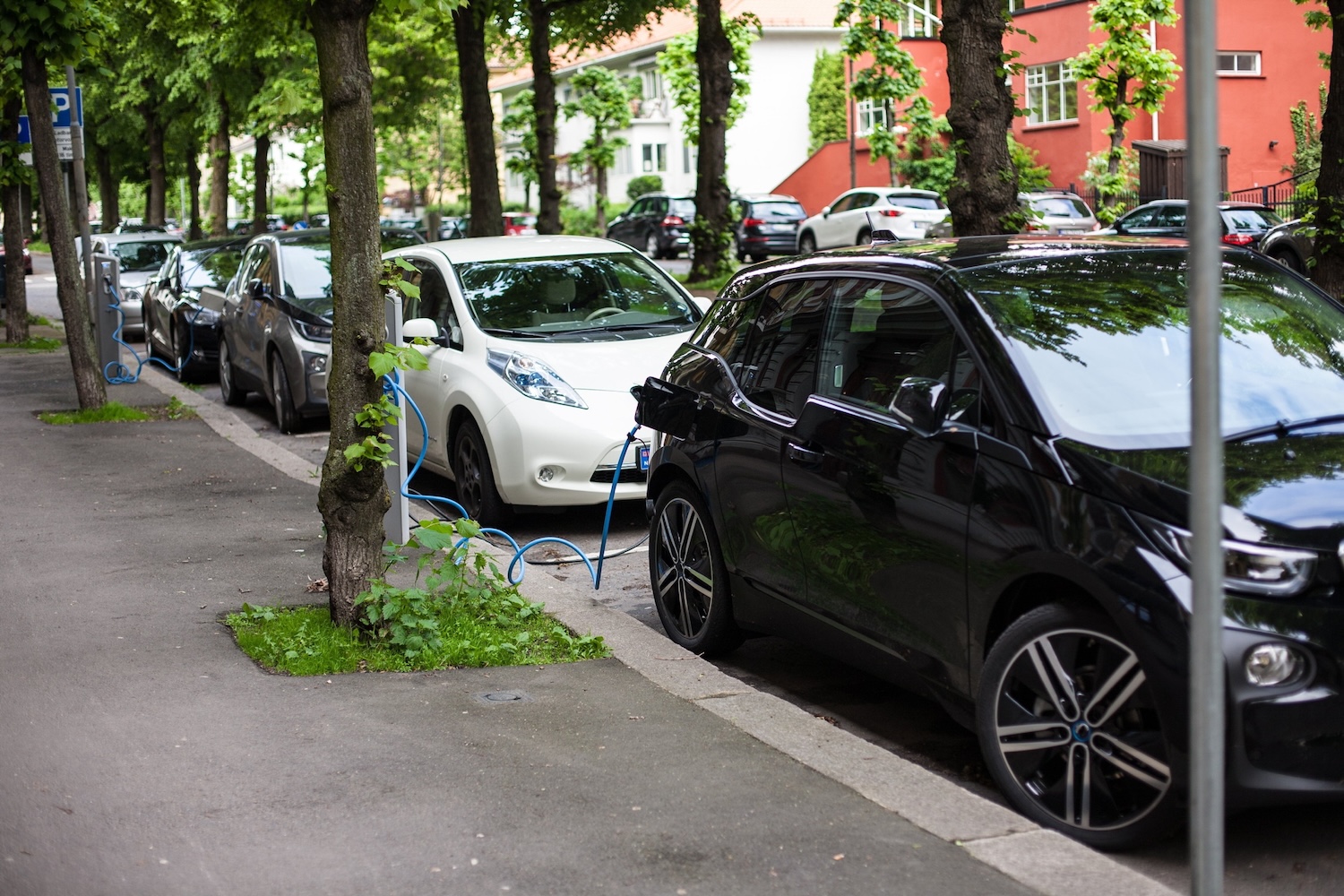
Kerbside provision, like lamp-post charging, has boosted uptake elsewhere, such as in the early days of EV pioneering city Oslo’s transition, according to Sture Portvik, project leader for the Norwegian capital’s electric mobility. “Seeing is believing,” he says.
Supermarkets and other retail hubs are increasingly installing chargers, recognising that they help entice customers, and since 2022 homebuilders in England have been required to install EV sockets in all new homes with parking spaces.
However, a £950mn rapid charging fund — aimed at boosting electricity grid upgrades at motorway services — has proved “more difficult than anticipated”, according to the National Audit Office. A government spokesperson said it was still in the pilot phase, but declined to clarify the fund’s future.

Charging an EV at home is relatively cheap, but public charging costs remain high. According to a Zapmap survey, about 80 per cent of EV owners have access to a home charger and use it for most of their needs, paying around £660 a year at a cost of four pence per kilometre (seven pence per mile).
While the costs of installing a home charger can be covered by companies providing EV leaseholds, other motorists may have to pay about £1,000 to have one fitted.
The majority of EV owners mostly charge at home . . .
EV owners by charging patterns (%)

Mostly charge
at home
Often charge
at home
Don’t have a
home charger
70%
10%
20%
Home
charger
Mostly
charge
at home
Often
charge
at home
Don’t have
a home
charger
100%
Slow or fast
public charging
points
80%
60%
50%
40%
Rapid or
ultra-rapid
charging
25%
80%
80%
20%
20%
25%
20%
0%

Mostly charge
at home
Often charge
at home
Don’t have a
home charger
70%
10%
20%
Home
charger
Mostly charge
at home
Often charge
at home
Don’t have a
home charger
100%
Slow or fast public
charging points
80%
60%
50%
40%
Rapid or ultra-
rapid charging
25%
80%
80%
20%
20%
25%
20%
0%
. . . and having a home charger makes it much cheaper to run an EV
Estimated annual cost (£)

Mostly charge at home
£660
Often charge at home
£1,100
Don’t have a home charger
£1,740
Drive an internal combustion engine
£1,430

Mostly charge at home
£660
Often charge at home
£1,100
Don’t have a home charger
£1,740
Drive an internal
combustion engine
£1,430
Drivers without home charging have to rely on public charge points and could end up paying about £1,740 a year.
Vicky Read, chief executive of trade group ChargeUK, has called for more action “to ensure that affordability is not a hurdle in the transition to EVs”.
The time it takes to charge also worries Britons, making it into the top four barriers to EV adoption, according to YouGov’s poll.
Charging speeds compared
How long it typically takes to charge a 64kWh MG4 from 20 to 80 per cent
Type | Power | Time |
|---|---|---|
20% 80% | ||
Low-powered | <50 | 7-9 hours |
Rapid | 50-149 | 45-60 mins |
Ultra-rapid | 150-350 | 25 mins |
Solutions
While public charging is inevitably going to cost more given developers need to make a return, experts say costs could be cut.
One obvious example is reducing VAT on public charging — currently set at 20 per cent compared with 5 per cent at home.
Operators also want to be charged based on how much electricity they use. Companies that have invested in locations ahead of demand have found themselves paying high fees for parking bays on which they are not yet making much revenue. “This is having an impact on investment and it’s being passed on to consumers,” notes Read at ChargeUK.
Charging companies also want electricity for EVs to be included in the UK’s Renewable Transport Fuel Obligation scheme. This would allow them to sell credits to fossil fuel suppliers, creating an extra revenue stream and potentially reducing costs. “It’s something we should consider,” says Richard Bartlett, chief executive of BP Pulse. “You need to de-risk investment.”
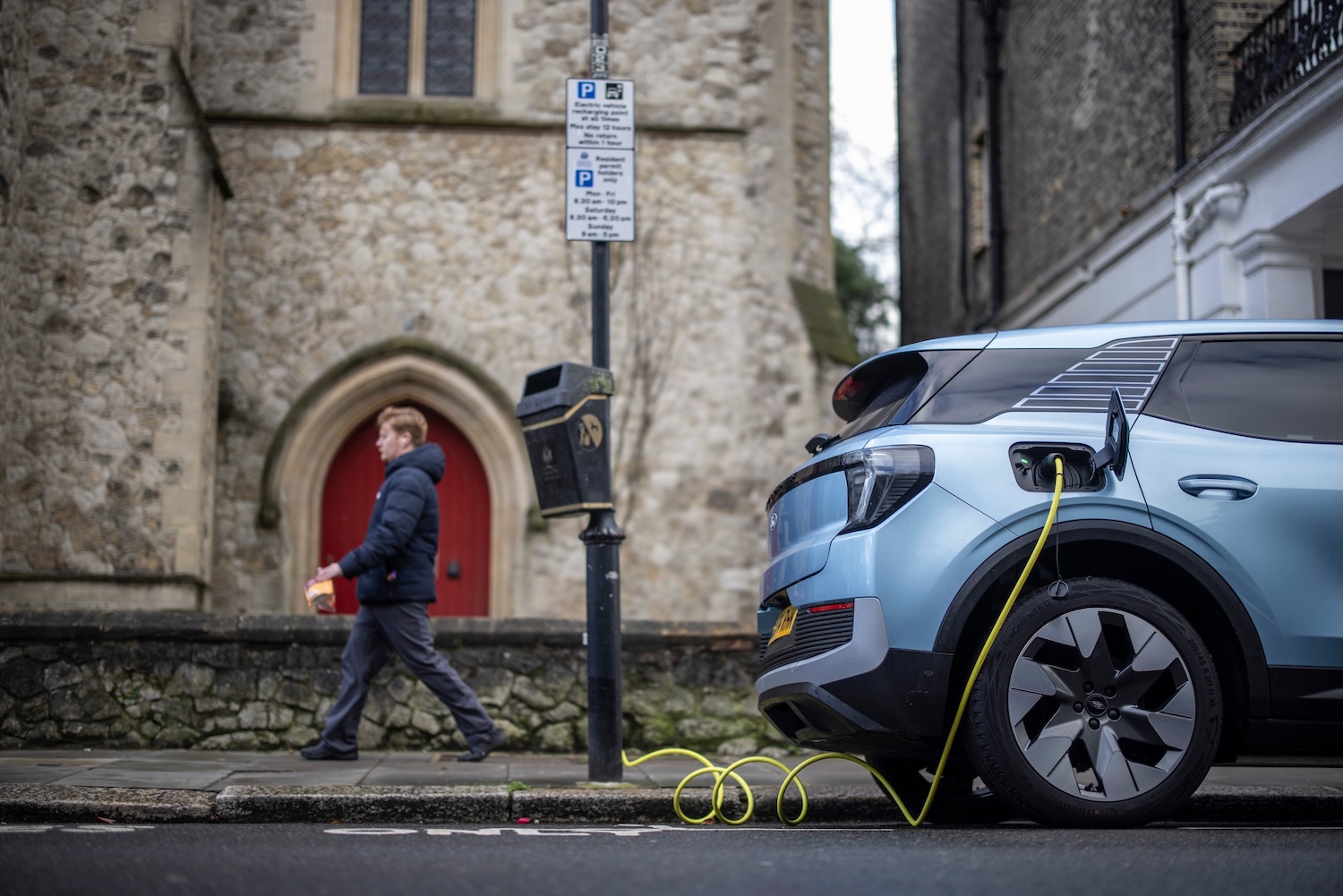
Residents with private charge points are also beginning to share their facilities. Services such as Co Charger offer a kind-of Airbnb for charging, where drivers can book use of a neighbour’s facility.
Cables underneath pavements could also help more people access private plug-in points, particularly on the UK’s many terraced streets, but they are not without their challenges.
Chris Richmond, who paid around £2,000 to have a gully installed at his terraced home in Bounds Green, London, now has access to cheaper charging and no longer has to rely on nearby public devices, which he says are often busy or broken. But using his private charger requires him to park directly outside his home. “If someone’s parked in the two spaces it works in outside your house, you’re stuffed,” he says.
There are grants available for some people wanting to fit new chargers, such as those living in flats and landlords of residential and commercial properties, but they are due to end in March.
New home plug-in points are also required to communicate in real-time with energy suppliers, enabling companies to offer consumers cheaper prices when supply is plentiful and encouraging motorists to avoid peak times and lessen strain on the grid. “Our R&D now is much more focused on how we help customers optimise their time of use,” says Melanie Lane, chief executive of home and business charger provider Pod Point.
Vehicle-to-grid (V2G) technology is also being developed that enables cars to sell electricity back into the system. A trial by Ovo Energy in 2020 reported that drivers could earn £340 a year on average by doing so. Octopus Energy’s new V2G tariff guarantees free charging to drivers who plug in for about six hours a day, allowing the company to optimise their charging, as long as they stay below the limit of 333kWh per month — roughly 19,000km (12,000 miles) a year.
Despite the progress made over the past few years, many drivers still do not feel confident making the switch. Recent surveys have consistently shown motorists have concerns around pricing, charging and the durability of batteries.
“The really big thing that’s playing into this is just the perception,”says Ginny Buckley, founder of Electrifying.com, an EV buying advice site.
According to a poll of petrol and diesel car drivers conducted for the non-profit Energy and Climate Intelligence Unit in April last year, more than half the respondents got just two or fewer answers correct out of 10 statements about EVs.
More needs to be done to tackle these public misconceptions, says Max Warburton, chief financial officer for UK self-driving car start-up Wayve. “It’s actually quite compelling to buy an electric vehicle, so we’re getting to the point where some of the apparent consumer reticence is almost irrational,” he says.

Many politicians and urban planners do not just want us to switch to EVs, they want us to drive less overall.
“In a well-designed city, we’re looking for people to walk, cycle or use public transport [more],” says Michèle Dix at the National Infrastructure Commission, the UK government’s adviser. Zoe Allen, at C40, adds: “I don’t know any city that isn’t also thinking about how they can get people out of cars.” Policymakers argue this would tackle congestion, improve health and help the UK meet carbon targets.
Car ownership has risen significantly in Britain over the past 50 years, according to data from the Department for Transport (DfT). Nonetheless, the total distance driven has fallen slightly. Cars and taxis travelled 407bn km in Britain in the year to the end of September 2024, down 3.9 per cent compared with 2019, DfT figures show.
One in three households now has at least two cars
Households in Great Britain (1971 to 1988) and England (from 1989) by car access, %
The NIC says people need to use cars less to reduce traffic, which adds to strain “on the labour market and growth capacity in some cities”, mainly because it prevents people from getting around efficiently.
Although the UK government has not set a national target, London’s Labour mayor, Sadiq Khan, wants 80 per cent of all journeys to be made on foot, bicycle, or public transport by 2041, up from about 63 per cent now. Scotland wants to cut the kilometres driven by cars by 20 per cent by 2030, while the Welsh government wants 39 per cent of journeys to be made by “sustainable transport modes” by 2030.
A variety of measures have been used to force, rather than incentivise, people out of cars, such as charging certain drivers to enter city centres, for example in London, Birmingham and Oxford.
Other countries have tried different methods. Norwegian capital Oslo squeezed vehicles out of its city centre by removing parking spaces. Yet Marit Kristine Vea, Oslo’s vice-mayor for environment and transport, notes that while the city’s shift to EVs was relatively smooth thanks to financial incentives, changing attitudes to driving altogether has been a greater challenge.
A difficulty for the UK is making sure going car-less is achievable for all income groups, those with disabilities and those in rural areas, where there are fewer transport options and longer distances between essential facilities.
Public transport in Britain remains expensive. Bus and coach fares have climbed more than 70 per cent over the past 10 years, according to figures from the RAC Foundation, outpacing motoring costs at 53 per cent. Rail fares have risen by 36 per cent. But journeys also need to be better connected, accessible and more reliable if we are to get more people out of vehicles, according to the Centre for Cities, an independent think-tank.
Improving public transport between key hubs and supporting active travel options, such as safe bike routes, offer some alternatives outside cities.
Electric vehicle car-sharing schemes offer another opportunity. A number of local authorities in Oxfordshire have teamed up to offer the public the use of 14 EVs, which they can hire by the hour or day. Oxfordshire county council estimates each vehicle could take, on average, 20 individually owned cars off the road.
But unlike in Greenwell’s utopia, a wide range of travel choices are simply not available to many in the UK.
“It should not be assumed that the most effective approach is to simply replace every petrol or diesel car or van with an electric equivalent,” says Chris Rimmer, head of policy at non-profit transport consultancy Cenex. “This would miss a significant opportunity to rethink how we move people and goods around or between our cities, towns and villages.”
Illustrations by Ian Bott, Bob Haslett and Cleve Jones. Additional work by Chris Campbell and Justine Williams.
Calculations for the graphic comparing the estimated annual cost to run an EV with an internal combustion engine car assume 10,000 miles travelled each year. The figure used for the price of petrol is 137 pence per litre, as at December 31 2024. Cost for home charging is set at 7.5 pence per kilowatt hour (kWh) - the average of nine intelligent or overnight tariffs available in December 2024. The price at public charge points is based on the weighted average from Zapmap’s data covering 70 per cent of public chargers and 1.5mn charging sessions per month, with slow or fast public charging points at 53 pence per kWh and rapid or ultra-rapid devices at 80 pence. Vehicles used in the comparison are the VW electric ID.3 and the VW Golf 43.5mpg.