Japan confectioner Chateraise launches chocolate made from Indonesian cacao
(Mainichi Japan)
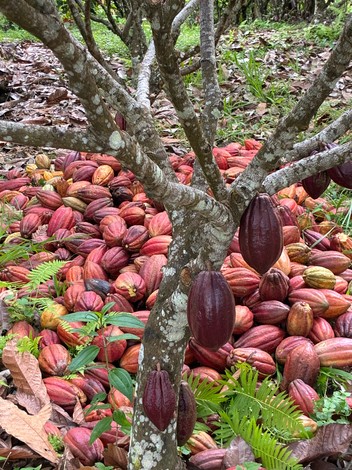
TOKYO -- Chateraise Co., one of Japan's largest confectionery makers, headquartered in Kofu, Yamanashi Prefecture, has begun producing and selling chocolate products made with cacao from Indonesia.
The process starts with involvement at the plantation stage and extends to commercializing the products through cross-border fair trade -- something the company is doing for the first time. In the producing region, it has also created jobs and boosted farmers' motivation to grow the crop.
With "delicious and affordable" as its motto, Chateraise has for more than 30 years promoted its "farm factory concept," under which it procures confectionery ingredients such as eggs, milk, fruit and water directly from contract farmers and other suppliers, then manufactures products at nearby factories. While maintaining a mass-production system using machinery, it has used the strengths of locally sourced ingredients for local consumption and connected that approach to making lower-priced products.
For years, the company relied on imported cacao for its chocolate, and a proposal emerged to make full-scale use of cacao grown on Indonesia's Sulawesi island through an Indonesian joint venture.
In 2023, Chateraise secured approval for its "business demonstration project for cacao cultivation and climate change countermeasures" under a Japan International Cooperation Agency program that backs private-sector initiatives addressing challenges in developing countries. With about 20-million-yen (roughly $126,000) support, local cacao production got underway.
World's 3rd-largest cacao producer
Indonesia is the world's third-largest cacao producer after the Ivory Coast and Ghana. However, bean quality varies, and because fermentation processes have not been adequately developed, much of the crop has been distributed as cocoa powder. Compared with premium African chocolate distributed worldwide through European companies, Indonesian cacao tends to be priced lower. Although Sulawesi island's climate and geology are suitable for cacao cultivation, land cleared by deforestation is often converted to growing feed corn, and the region remains trapped in a situation where many people cannot escape poverty.
Northern Sulawesi's Gorontalo province and other areas were chosen as production sites largely because Rachmat Gobel, owner of Gobel International, with which Chateraise has been pursuing a joint venture since 2017, has ancestors from the province.
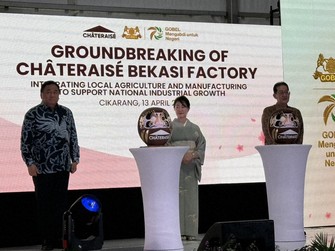
Gobel, who is also an Indonesian lawmaker, is known for his affinity with Japan and serves as head of a Japan-Indonesia parliamentary friendship group. During a visit to Japan in 2016, he met Chateraise Chairman Hiroshi Saito, who died in 2024, and was reportedly impressed by his approach to confectionery making. In 2022, the two sides built a joint venture factory in Bogor, near Jakarta, and now operate about 60 stores in Indonesia. On April 13, construction began on a second factory in nearby Bekasi.
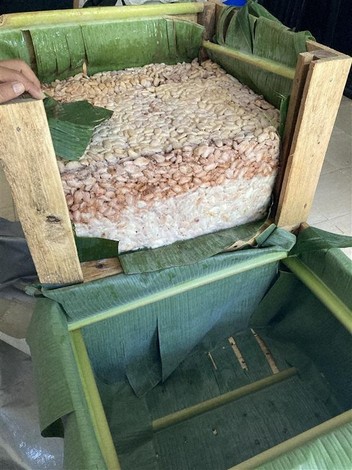
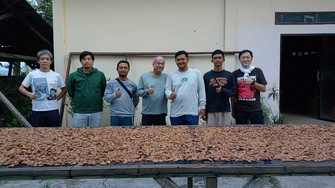
In early 2024, Shin Tsushima, manager of the raw materials purchasing section at Chateraise's headquarters, visited Indonesia with his team and oversaw the entire process -- from selecting farmland to managing fermentation and drying. During the twice-yearly harvests, they placed particular emphasis on hygiene in sorting, fermentation and drying to ensure higher quality with less poor tasting cacao.
Aim to expand to 100 tons a year in the future
At first, many producers placed priority on price, but the company says understanding has gradually spread about making high-quality products. By avoiding unnecessary deforestation and buying at prices higher than before, it was able to realize "fair trade."
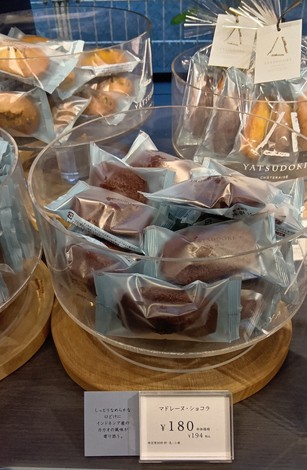
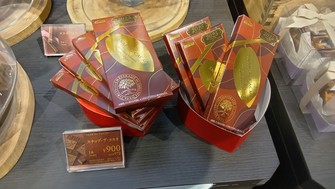
About 300 kilograms of cacao harvested in the first half of 2025 was exported to Japan and turned into two products at a factory in Yamanashi Prefecture: a 70% cacao chocolate bar called "Snap the Cacao" priced at 900 yen (about $5) before tax, and "Madeleine Chocolat" priced at 180 yen (roughly $1) before tax. Hirotoshi Saito, who was in charge of product development, said, "It became a chocolate with a bold character, yet with a glamorous, fruity aroma that spreads through it."
The two chocolate sweets went on sale in March at Yatsudoki, Chateraise's line of premium stores, and other selected locations. Emi Miyauchi, manager of Yatsudoki's Jiyugaoka store in Tokyo's Meguro Ward, said, "This area is a fiercely competitive district for specialty chocolate, but these products have been well received because of their balance of price and quality, as well as their uniqueness."
The company expected to harvest about 3 metric tons in the second half of 2025 and plans eventually to expand to 100 tons a year. Tsushima said, "Right now, we transport cacao beans to Japan for processing, but in the future we want to process them into semifinished products at a factory in Indonesia. We also plan to expand our stores in Indonesia, and we want to use them for products for the local market as well."
From high-quality raw materials sourced directly from farms to factories and ultimately to consumers. The "farm factory concept" championed by the company's founder is beginning to spread overseas as well.
(Japanese original by Tadahiko Mori, The Mainichi Staff Writer)