Editorial: 70 yrs after recognition of Minamata disease, Japan must not forget lessons
(Mainichi Japan)
Seventy years have passed since Minamata disease, known in Japan as "the starting point of environmental pollution problems," was officially recognized, yet the suffering of victims continues to this day. The stances of the national government and the company involved, which failed to face the reality of the damage head-on, have delayed relief for the victims.
In 1956, two young sisters in Minamata, Kumamoto Prefecture, were admitted to the hospital attached to the Minamata factory of Shin-Nippon Chisso Hiryo K.K. (now Chisso Corp.) with severe symptoms including loss of speech. The hospital director reported to a public health center that "patients with unexplained brain symptoms have emerged." This is regarded as official confirmation of the disease.
The cause was attributed to methylmercury generated in the manufacturing process of raw materials for plastics and other products. Mercury in factory wastewater contaminated fish and shellfish, and people who ate them developed neurological disorders. The harm also reached the fetuses of pregnant women who consumed the contaminated seafood.
Fisherman Hajime Sugimoto, 65, lost his grandfather, head of a fishermen's group, when he was 8 years old, and both of his parents were certified patients. He recounted, "The first time I lost a family member, it was due to Minamata disease, and I was shocked to realize this was a disease that could kill people. I became anxious that my parents' lives might also be in danger."
Distortions of economic growth visible
Initially, Kumamoto University announced that "methylmercury is believed to be the substance responsible for Minamata disease," but Chisso disputed the findings, asserting a different theory. The national government was also reluctant to impose regulations, and the wastewater discharge did not stop.
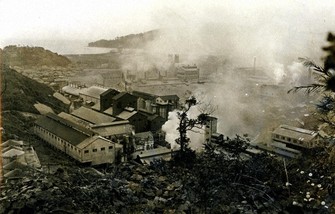
The government did not acknowledge that Chisso was responsible until 12 years after the official confirmation of the disease. During that time, the tragedy was repeated, with Minamata disease also confirmed in Niigata Prefecture in 1965.
The period during which the damage spread overlapped with the era of rapid economic growth in Japan. The country was scrambling to shift to industries centered on heavy and chemical manufacturing. The resulting strains became visible in cases including Yokkaichi asthma, caused by air pollution from smoke emitted by petrochemical plants, and itai-itai disease in Toyama Prefecture, triggered by cadmium discharged from mines into rivers.
Pollution countermeasures became a political issue, and the 1970 extraordinary Diet session came to be known as the "Pollution Diet," during which 14 related laws were enacted. The Environment Agency, now the Ministry of the Environment, was established to oversee these regulations, compensation and environmental conservation.
Yet even on the issue of compensation, the government has downplayed the extent of the damage. Although the Pollution-related Health Damage Compensation Law espouses the principle of "when in doubt, provide relief," this was hardly the reality.
The number of officially recognized Minamata disease patients, including in Niigata, is about 3,000 -- less than 10% of the number of applications filed. This is because of strict criteria requiring, in principle, the presence of multiple symptoms, such as sensory impairment in the limbs and motor ataxia.
In a 2004 Supreme Court ruling, the state was found responsible for failing to regulate wastewater discharge. Measures including lump-sum payments were adopted as partial relief for uncertified patients, but the state drew lines for eligibility based on where people lived. Victims have raised objections such as: "We ate fish from the same sea, so it makes no sense. Is this because they want to keep lump-sum payments and other costs within the budget?"
Gov't must move quickly for full relief
While more than 1,600 people in Japan who have not been granted relief are pursuing class action lawsuits, their average age has climbed to 74.
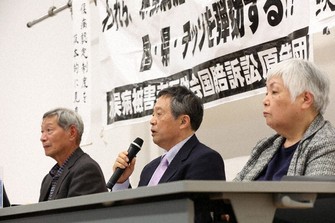
On top of this, the state has neglected to investigate the actual situation. More than 50,000 people have received lump-sum payments, medical benefits and other assistance, yet the full scope of the damage remains unknown.
Some people were unable to come forward for many years because they feared prejudice and discrimination. The state should move swiftly to provide full-scale relief.
Minamata disease is also directly connected to problems confronting society today.
As a result of continued mass production and mass consumption, global warming and environmental pollution by plastics and other substances have advanced, posing health risks to people. Yasuyuki Shibata, an emeritus researcher at the National Institute for Environmental Studies, points out, "Even today, broadly understanding and preventing the negative aspects of convenience remains a major challenge."
For many years, the state did not address the use of asbestos -- which causes mesothelioma, lung cancer and other diseases -- before damage among workers and residents near factories came to light. Meanwhile, the government has remained reluctant to identify the sources of contamination from organic fluorine compounds known as PFAS, which have been detected in succession across the country and have been identified as carcinogens.
Lessons from Minamata disease have been shared around the world, and the Minamata Convention on Mercury, aimed at preventing health hazards and environmental pollution caused by mercury, took effect in 2017. Even so, the use of mercury remains unchecked at gold-mining sites in developing countries.
Chiharu Tohyama, professor emeritus at the University of Tokyo, says, "The negative effects of economic growth take a toll on regions and people in vulnerable positions. Minamata disease also serves as a warning about these structural problems."
Minamata disease is a catastrophe unparalleled in terms of the severity of its health impacts and environmental destruction. We must not allow its lessons to fade from our memory.