Language
Collaboration diagram for Language:
Classes | |
| struct | Base11 |
| struct | Derived11 |
Functions | |
| void | types_11 () |
| void | unique_pounter () |
| unique_ptr More... | |
| void | shared_pointer () |
| shared_ptr More... | |
| void | weak_pointer () |
| weak_ptr More... | |
| void | dynamic_memory_11 () |
| char | func_type (const int &x) |
| char | func_type (int &x) |
| char | func_type (int &&x) |
| template<class T > | |
| char | func_type_template (T &&x) |
| Forwarding reference More... | |
| void | references_11 () |
| void | init_11 () |
| auto | trailing_return_type (int a) -> int |
| void | copy_elision_demo () |
| copy_elision More... | |
| void | func_11 () |
| constexpr int | constexpr_factorial (int n) |
| https://en.cppreference.com/w/cpp/language/constexpr More... | |
| template<typename T > | |
| constexpr T | adder (T v) |
| https://en.cppreference.com/w/cpp/language/parameter_pack More... | |
| template<typename T , typename... Args> | |
| constexpr T | adder (T first, Args... args) |
Variables | |
| auto | auto_int = 1 |
| https://en.cppreference.com/w/cpp/language/auto More... | |
Detailed Description
Function Documentation
◆ adder() [1/2]
template<typename T , typename... Args>
|
constexpr |
Definition at line 323 of file 11.cpp.
constexpr T adder(T v)
https://en.cppreference.com/w/cpp/language/parameter_pack
Definition: 11.cpp:318
Here is the call graph for this function:

◆ adder() [2/2]
template<typename T >
|
constexpr |
https://en.cppreference.com/w/cpp/language/parameter_pack
Definition at line 318 of file 11.cpp.
Here is the caller graph for this function:

◆ constexpr_factorial()
|
constexpr |
https://en.cppreference.com/w/cpp/language/constexpr
Definition at line 310 of file 11.cpp.
constexpr int constexpr_factorial(int n)
https://en.cppreference.com/w/cpp/language/constexpr
Definition: 11.cpp:310
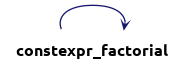
Here is the call graph for this function:
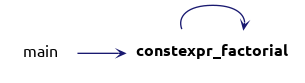
Here is the caller graph for this function:
◆ copy_elision_demo()
| void copy_elision_demo | ( | ) |
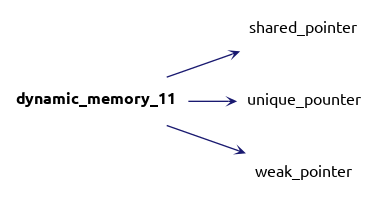
◆ dynamic_memory_11()
| void dynamic_memory_11 | ( | ) |

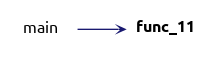
◆ func_11()
◆ func_type() [1/3]
| char func_type | ( | const int & | x | ) |
func_type - overloaded functions remove_reference
Definition at line 146 of file 11.cpp.
Here is the caller graph for this function:
