A Python function is a named block of code that performs specific tasks and can be reused in other parts of your code. Python has several built-in functions that are always available, and you can also create your own. These are known as user-defined functions.
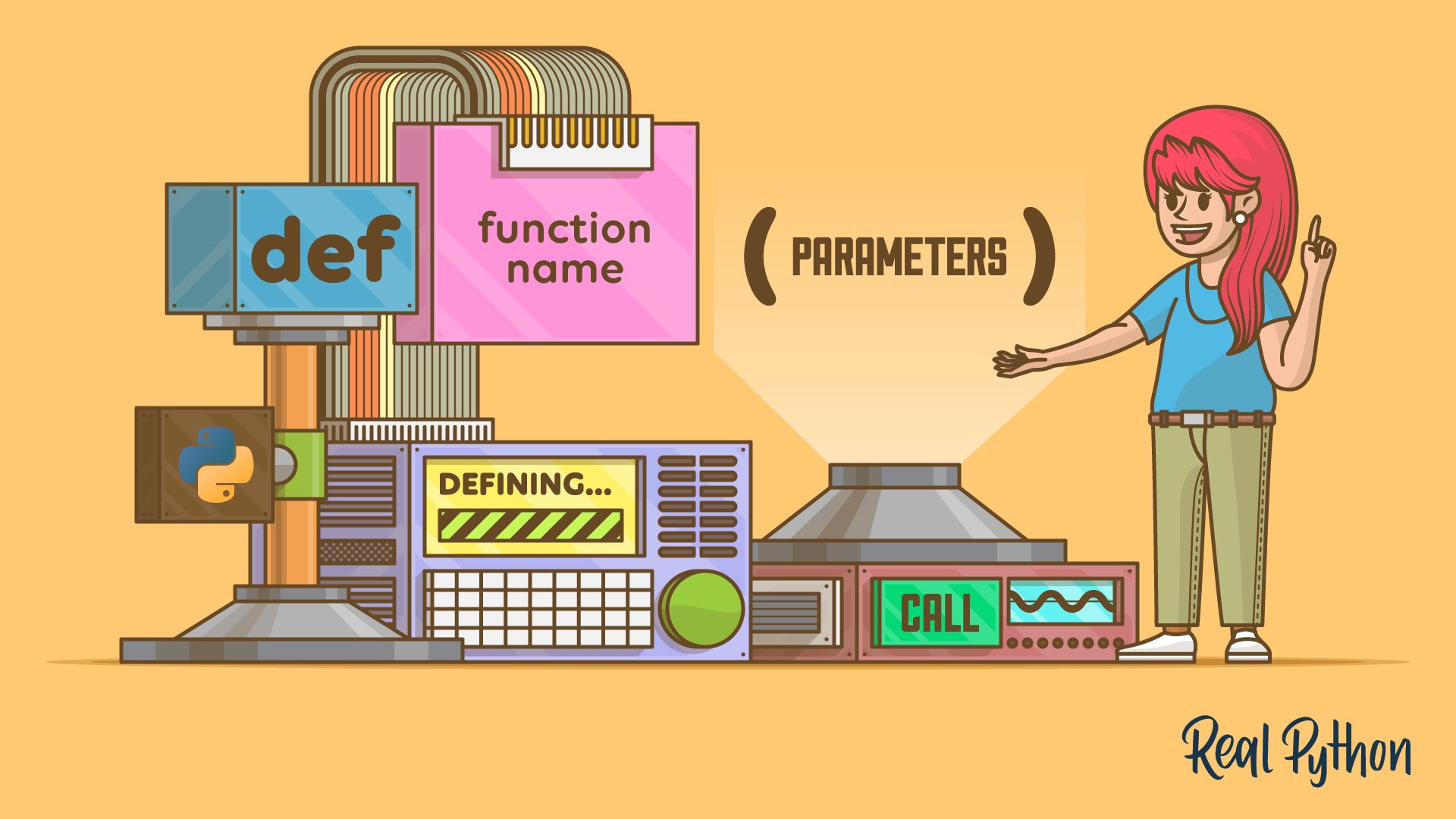
To define a function in Python, you use the def keyword, followed by the function name and an optional list of parameters enclosed in a required pair of parentheses. You can call and reuse a function by using its name, a pair of parentheses, and the necessary arguments.
Learning to define and call functions is a fundamental skill for any Python developer. Functions help organize your code and make it more modular, reusable, and easier to maintain.
By the end of this tutorial, you’ll understand that:
- A Python function is a self-contained block of code designed to perform a specific task, which you can call and reuse in different parts of your code.
- You can define a Python function with the
defkeyword, followed by the function name, parentheses with optional parameters, a colon, and then an indented code block. - You call a Python function by writing its name followed by parentheses, enclosing any necessary arguments, to execute its code block.
Understanding functions is key to writing organized and efficient Python code. By learning to define and use your own functions, you’ll be able to manage complexity and make your code easier to read.
Get Your Code: Click here to download the free sample code that shows you how to define your own function in Python.
Take the Quiz: Test your knowledge with our interactive “Defining Your Own Python Function” quiz. You’ll receive a score upon completion to help you track your learning progress: