The World Heritage Committee
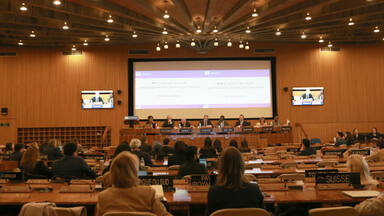
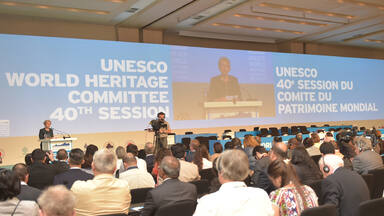
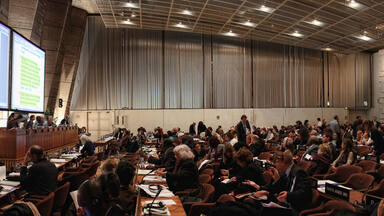
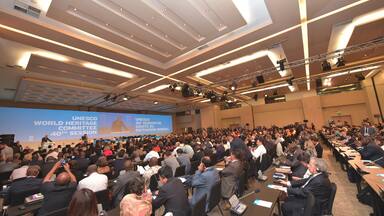
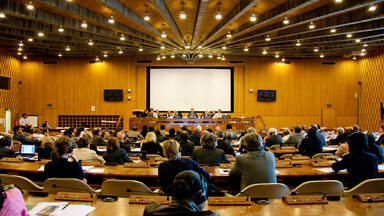
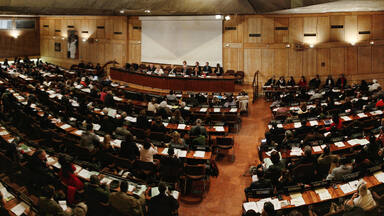
The World Heritage Committee meets once a year, and consists of representatives from 21 of the States Parties to the Convention elected by their General Assembly. At its first session, the Committee adopted its Rules of Procedure of the World Heritage Committee.
The Committee is responsible for the implementation of the World Heritage Convention, defines the use of the World Heritage Fund and allocates financial assistance upon requests from States Parties. It has the final say on whether a property is inscribed on the World Heritage List. It examines reports on the state of conservation of inscribed properties and asks States Parties to take action when properties are not being properly managed. It also decides on the inscription or deletion of properties on the List of World Heritage in Danger.
48th session
of the World Heritage Committee
19-29 July 2026
Busan, Republic of Korea
Bureau of the World Heritage Committee
The Bureau consists of seven States Parties elected annually by the Committee: a Chairperson, five Vice-Chairpersons, and a Rapporteur. The Bureau of the Committee coordinates the work of the Committee and fixes the dates, hours and order of business of meetings. The election of the new Bureau will take place at the end of the next session of the World Heritage Committee.
Chairperson: H.E. Mr Lee Byong Hyun (Republic of Korea)
Rapporteur: Ms Ashley Jones (Jamaica)
Vice-Chairpersons: Jamaica, Lebanon, Senegal, Türkiye, Ukraine
World Heritage Committee Members
According to the World Heritage Convention, a Committee member's term of office is for six years, but most States Parties choose voluntarily to be Members of the Committee for only four years, in order to give other States Parties an opportunity to be on the Committee.
The 21 States Parties of the current World Heritage Committee are the following:
Armenia Azerbaijan Bangladesh Czechia Grenada Jamaica Kazakhstan Kenya Kuwait Lebanon Mongolia Peru Poland Republic of Korea Senegal Switzerland Togo Türkiye Ukraine United Republic of Tanzania Viet Nam
The "Five Cs"
Strategic Objectives of the World Heritage Convention
Strengthen the Credibility of the World Heritage List, as a representative and geographically balanced testimony of cultural and natural properties of outstanding universal value.
Ensure the effective Conservation of World Heritage properties.
Promote the development of effective Capacity-building measures, including assistance for preparing the nomination of properties to the World Heritage List, for the understanding and implementation of the World Heritage Convention and related instruments.
Increase public awareness, involvement and support for World Heritage through communication.
Enhance the role of communities in the implementation of the World Heritage Convention.
Read more
Rules of Procedure
Established under the Convention concerning the Protection of the World Cultural and Natural Heritage adopted by the General Conference of UNESCO at its seventeenth session on 16 November 1972. The Rules of Procedure were last revised by the World Heritage Committee at its thirty-ninth session (Bonn, 2015). The Rules of Procedure are periodically revised to reflect the decisions of the World Heritage Committee.
 Rules of Procedure (July 2015) Règlement Intérieur (juillet 2015)
Rules of Procedure: Historical Development
Ordinary sessions of the World Heritage Committee
Extraordinary Sessions of the World Heritage Committee
More
All Committee DecisionsAll Committee Sessions
All Bureau meetings












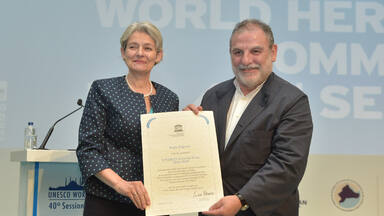
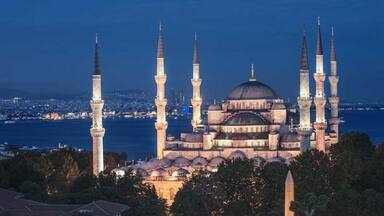
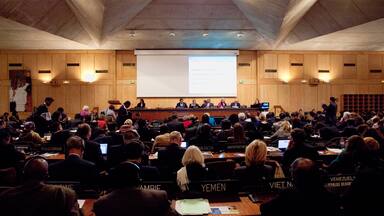






Decisions (3)
The World Heritage Committee,
- Recalling its Decision 38 COM 15, adopted at its 38th session (Doha, 2014), which elected its Bureau whose mandate will be until the end of its 39th session (Bonn, 2015),
- Also recalling its Decision 39 COM 18 according to which its 40th session will take place in Istanbul, Turkey, from 10 to 20 July 2016,
- Recalls that the hosting of a World Heritage Committee session by a Committee member is subject to the host country signing a host country agreement in conformity with UNESCO’s rules and regulations and that host country agreements for category II meetings must be signed eight months in advance of the meeting;
- Also recalls that, pursuant to Rule 44.3 of the Rules of Procedure of the Committee, arrangements by the host country to provide interpretation in another language than the working languages of the Committee (English and French), or another official working languages recognized by the United Nations, should be in compliance with UNESCO’s rules, regulations and procedures;
- Decides to elect, in accordance with Rule 13.1 of the Rules of Procedure of the Committee, its Bureau with the following composition:
- H.E. Ambassador Gürcan TÜRKOḠLU (Turkey) as Chairperson of the World Heritage Committee, whose mandate will begin at the end of the 39th session of the Committee (Bonn, 2015) until the end of the 40th session of the Committee (2016),
- Lebanon,
Peru,
Philippines,
Poland and
Senegal (until the 20th session of the General Assembly)
as Vice-Chairpersons of the World Heritage Committee, whose mandates will begin at the end of the 39th session of the Committee (Bonn, 2015) until the end of the 40th session of the Committee (2016), - Mrs Eugene JO (Republic of Korea) as the Rapporteur of the World Heritage Committee whose mandates will begin at the end of the 39th session of the Committee (Bonn, 2015) until the end of the 40th session of the Committee (2016);
- Also decides that the Bureau of the 41st session of the World Heritage Committee (2017) will be elected at the end of the 40th session of the World Heritage Committee (2016) in accordance with Rule 13.1 of the Rules of Procedure of the World Heritage Committee;