New Inscribed Properties
2005
New Inscribed Properties Cultural properties
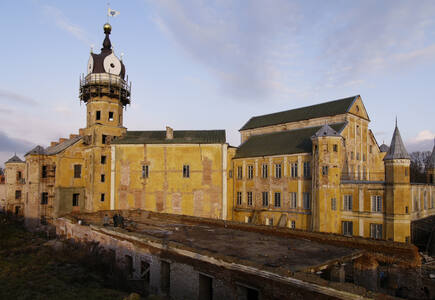
Architectural, Residential and Cultural Complex of the Radziwill Family at Nesvizh
The Architectural, Residential and Cultural Complex of the Radziwill Family at Nesvizh is located in central Belarus. The Radziwill dynasty, who built and kept the ensemble from the 16th century until 1939, gave birth to some of the most important personalities in European history and culture. Due to their efforts, the town of Nesvizh came to exercise great influence in the sciences, arts, crafts and architecture. The complex consists of the residential castle and the mausoleum Church of Corpus Christi with their setting. The castle has ten interconnected buildings, which developed as an architectural whole around a six-sided courtyard. The palaces and church became important prototypes marking the development of architecture throughout Central Europe and Russia.


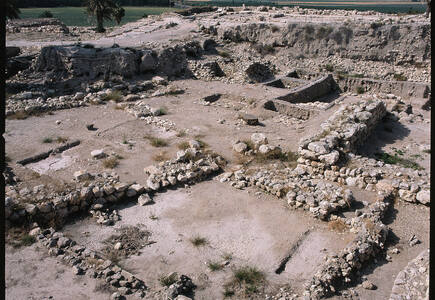
Biblical Tels - Megiddo, Hazor, Beer Sheba
Tels (prehistoric settlement mounds), are characteristic of the flatter lands of the eastern Mediterranean, particularly Lebanon, Syria, Israel and eastern Turkey. Of more than 200 tels in Israel, Megiddo, Hazor and Beer Sheba are representative of those that contain substantial remains of cities with biblical connections. The three tels also present some of the best examples in the Levant of elaborate Iron Age, underground water-collecting systems, created to serve dense urban communities. Their traces of construction over the millennia reflect the existence of centralized authority, prosperous agricultural activity and the control of important trade routes.


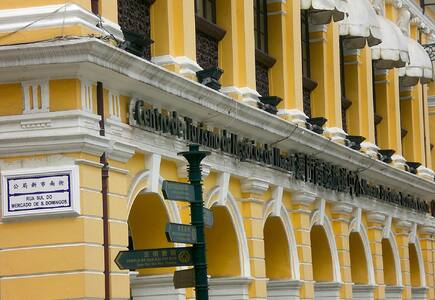
Historic Centre of Macao
Macao, a lucrative port of strategic importance in the development of international trade, was under Portuguese administration from the mid-16th century until 1999, when it came under Chinese sovereignty. With its historic street, residential, religious and public Portuguese and Chinese buildings, the historic centre of Macao provides a unique testimony to the meeting of aesthetic, cultural, architectural and technological influences from East and West. The site also contains a fortress and a lighthouse, the oldest in China. It bears witness to one of the earliest and longest-lasting encounters between China and the West, based on the vibrancy of international trade.